
April 1, 2026
Spec'ing a grade 2 cylindrical lock sounds simple — until two products look almost identical on paper.
PDQ's SD and SF Series are both grade 2 lever locks. They share the same chassis and the same lever and keying options. But they are not the same lock, and specifying the wrong one can create problems on the jobsite or in the finished space.
This post breaks down exactly what separates the two. You'll learn the difference in rose size, duty rating, latch options, and installation, so you can make the right call for your project.
What Is a Grade 2 Cylindrical Lock?
A grade 2 cylindrical lock meets the ANSI/BHMA A156.2 standard for light-to-medium commercial use. ANSI (American National Standards Institute) and BHMA (Builders Hardware Manufacturers Association) test locks for cycles, security, and finish durability. Grade 2 locks are rated for 250,000 cycles, making them a solid choice for most commercial applications.
Where Grade 2 Lever Locks Are Commonly Specified
Grade 2 lever locks show up across a wide range of commercial projects, including:
- Office buildings
- Schools and universities
- Multi-family housing
- Healthcare facilities
- Retail spaces
They balance performance and cost well for doors that see regular but not extreme traffic.
Shared DNA: What the PDQ SD and SF Series Grade 2 Locks Have in Common
It helps to know what these two locks share before comparing their differences.
Both the SD and SF are grade 2 cylindrical locks built on the same internal chassis. That means the same proven mechanical platform sits inside each lock. The difference between them is physical, not functional.
Both locks also come with the same lever styles. And both use the same keying options. That matters more than it might seem at first.
Why Shared Lever and Keying Options Matter on Large Projects
On a big project, you might spec both the SD lock and the SF lock across different doors. Because they share the same levers and keyways, your hardware schedule stays clean. No mismatched finishes. No separate key systems to manage. That saves time for project managers, facility managers, and distributors coordinating a full door hardware package.
The two locks differ in rose size, duty rating, and a few key features. But the shared foundation makes them easy to use together on the same project.
SD vs. SF: Key Differences in Rose Size, Duty Rating, and Installation
This is where the two locks part ways. Knowing these differences helps you spec the right lock the first time.
Rose Size: The Primary Visual Difference
The rose is the round (or square) plate that sits between the lever and the door face. It's one of the first things people notice on a finished door.
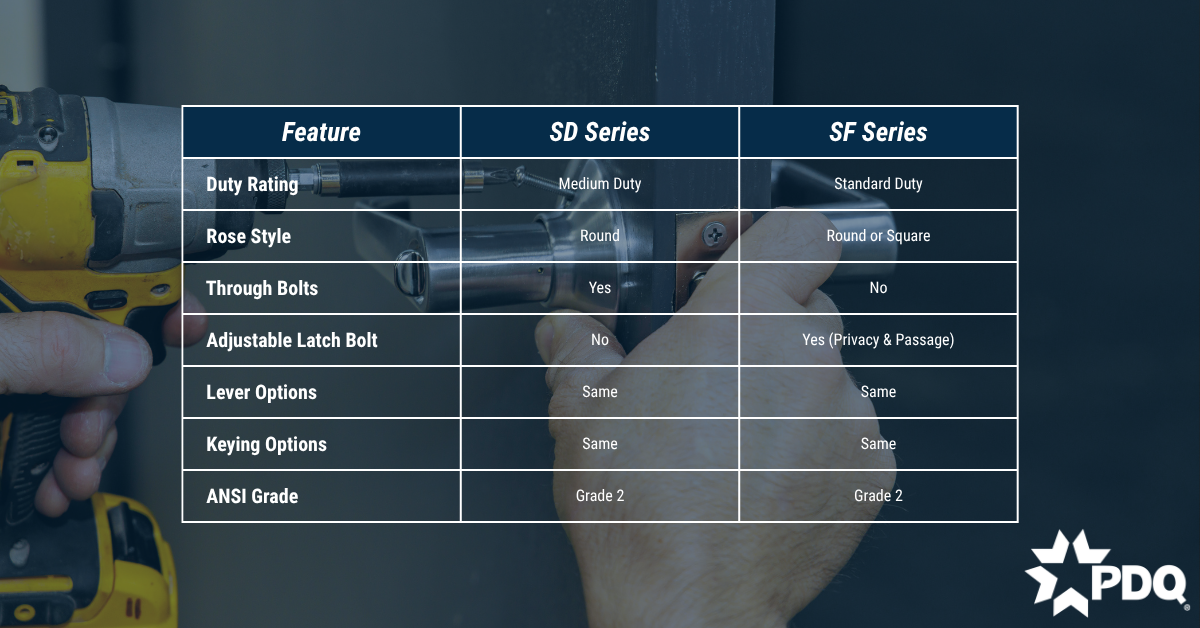
The SD lock comes with a standard round rose. The SF lock is available with a square rose. That single option opens up design choices that matter to architects and designers working on projects where aesthetics are part of the spec.
The SD Series: Medium Duty with Through Bolt Stability
The SD is a medium duty grade 2 cylindrical lock. It includes through bolts, which pass through the door and pull both sides of the lock together. This creates a tighter, more stable connection to the door face.
That added stability makes the SD a smart choice for busier doors. Think offices, schools, and healthcare facilities where doors get used hard every day.
The SF Series: Standard Duty with Adjustable Latch and Square Rose
The SF is a standard duty grade 2 cylindrical lock. It does not include through bolts. But it offers something the SD does not.
On privacy and passage functions, the SF lock comes with an adjustable latch bolt. It fits both a 2-3/8" and 2-3/4" backset without swapping any parts. That flexibility saves time on the jobsite when door preps vary across a project.
The square rose option also makes the SF a popular pick when a cleaner, more modern look is part of the design.
SD vs. SF: Side-by-Side Comparison
SD or SF? How to Choose the Right Grade 2 Lever Lock for Your Application
Both locks are solid. The right choice comes down to your project's needs.
Choose the SD Series (SD Lock) When:
- You need a medium duty grade 2 cylindrical lock for higher-traffic doors
- Through bolt installation is required for added stability
- A round rose fits the design spec
- The door sees regular, demanding use (offices, schools, healthcare)
- Long-term rigidity and a secure mount to the door face are a priority
Choose the SF Series (SF Lock) When:
- A square rose is specified for a modern or contemporary look
- Standard duty grade 2 lever lock performance is sufficient for the application
- Privacy or passage functions are needed with adjustable latch flexibility
- Door preps vary across the project and a single latch fits both backsets
- Aesthetics are a key part of the design criteria
Still Not Sure? Talk to a PDQ Distributor
Sometimes the spec isn't clear cut. Door traffic, design requirements, and project budgets all play a role.
A PDQ distributor can help you work through the details. Because both the SD lock and SF lock share the same levers and keying options, switching between them on a project is straightforward. You won't disrupt the rest of your hardware schedule.
Contact a PDQ sales rep in your area or visit pdqlocks.com to get both products in front of the right people on your team.
Frequently Asked Questions About PDQ Grade 2 Cylindrical Locks
What is the difference between the PDQ SD and SF Series?
The main difference is rose size and duty rating. The SD lock has a round rose and is medium duty. It includes through bolts for added stability. The SF lock is standard duty and available with a square rose. On privacy and passage functions, the SF also comes with an adjustable latch bolt. Both locks share the same chassis, levers, and keying options.
What does ANSI Grade 2 mean for a cylindrical lock?
ANSI/BHMA Grade 2 means the lock has been tested to 250,000 cycles and meets a set standard for commercial use. It sits between Grade 1 (heavy duty, 1,000,000 cycles) and Grade 3 (residential). A grade 2 cylindrical lock is built for light-to-medium commercial applications like offices, schools, and multi-family housing.
Does the SF lock come with a square rose?
Yes. The SF lock is available with a square rose. This makes it a popular choice when a modern or contemporary aesthetic is part of the design spec. The SD Series comes with a round rose only.
Do the SD and SF Series use the same levers and keyways?
Yes. Both the lock SD and SF lock share the same lever styles and keying options. That makes it easy to use both locks across the same project without breaking your hardware schedule or key system.
What is a through bolt and why does it matter on the SD Series?
A through bolt passes through the door and connects both sides of the lock together. This pulls the lock tight against the door face and adds stability. The lock SD includes through bolts. The SF Series does not. For busier doors where a secure, rigid mount matters, the through bolt is a real advantage.
Can I use both the SD and SF Series on the same project?
Yes. Because both locks share the same chassis, levers, and keying options, they work well together on the same project. You can spec the SD lock on higher-traffic doors and the SF lock where aesthetics or adjustable latch flexibility are the priority, without any conflicts in your hardware schedule.
Spec the Right Grade 2 Cylindrical Lock with Confidence
The SD and SF Series are both strong grade 2 cylindrical locks. They share the same chassis, levers, and keying options. But each one is built for a different job.
The lock SD is the right call when you need medium duty performance, through bolt stability, and a round rose. The SF lock is the better fit when a square rose is specified, standard duty is enough, or adjustable latch flexibility is needed across varying door preps.
Knowing the difference saves time on the jobsite and keeps your hardware schedule clean.
Watch the video at the top of this post for a closer look at both locks side by side.
Ready to spec? Use these links to get what you need:
Have questions about which lock is right for your project? Reach out to a PDQ sales rep or contact the PDQ team directly. They know the product line and can help you make the right call.