Skip to content
    Talk to an Expert

      Commercial Door Closers

      Talk To An Expert

      Surface Mounted Door Closers for Every Opening

      A door closer controls how fast and how hard a door returns to the latch, and on a fire-rated opening it is part of what keeps the rating intact. PDQ's door closers cover four duty levels, so you can match the closer to the traffic instead of overbuying for every door. All five series are ANSI/BHMA A156.4 Grade 1 certified, UL listed for 3-hour fire doors, and backed by a 25-year limited warranty.

      Door Closers by Duty Level

      Start with how hard the door gets used. Every series below is Grade 1 and UL listed for 3-hour fire doors, so the choice comes down to traffic, abuse, cover style and retrofit fit.

      PDQ 7100 Series extra heavy duty commercial door closer
      Extra Heavy Duty

      7100 Series

      Our toughest commercial door closer, with a cast iron body and forged steel arm.

      • Adjustable size BF through 6 with a 1-1/2" piston
      • Extra Duty Parallel Arm option for high-abuse and vandal-prone doors
      • Fits the LCN 4040 hole pattern for retrofits

      Best for: Main entrances, stadiums, and doors that take abuse

      PDQ 5100 Series heavy duty commercial door closer
      Heavy Duty

      5100 Series

      A heavy duty closer with an aluminum alloy body, built for busy commercial entrances.

      • Adjustable size 1 through 6
      • Seven arm options, including track arm and Extra Duty Parallel Arm
      • Optional delayed action and optional full metal cover

      Best for: High-traffic entrances in offices, schools, and retail

      PDQ 5500 Series standard duty full cover door closer
      Standard Duty

      5500 Series, Full Cover

      Standard duty performance with a full cover that suits high-visibility entrances.

      • Adjustable size BF through 6
      • Full plastic cover, field reversible
      • Fits Norton 8300/8500 and Yale 3300/3500 hole patterns

      Best for: Classrooms, corridors, and typical entrances where the hardware is on display

      PDQ 5300 Series standard duty slim cover door closer
      Standard Duty

      5300 Series, Slim Cover

      The same Grade 1 closer as the 5500, with a slimmer, low-profile cover.

      • Adjustable size BF through 6
      • Streamline plastic cover, non-handed
      • Fits Norton 8300/8500 and Yale 3300/3500 hole patterns

      Best for: Classrooms, corridors, and typical entrances where a low profile is preferred

      PDQ 3100 Series light duty commercial door closer
      Light Duty

      3100 Series

      A Grade 1 light duty closer for moderate-traffic interior doors.

      • 3100 adjusts from size 3 to 6; 3101 adjusts from BF to 4
      • Optional streamline plastic cover
      • Fits Yale 50 and Norton 1600 hole patterns

      Best for: Private offices, break rooms, and storage

      Compare PDQ Door Closers

      Model DutyBodySizeCover StyleArm OptionsHold OpenDelayed ActionADARetrofits
      7100 Extra heavyCast ironBF–6Full plastic; metal optionalPA, HO, DS, SCS, TA, EDAYesOptionalYesLCN 4040
      5100 HeavyAluminum alloy1–6Full plastic; metal optionalPA, HO, DS, SCS, TA, EDA, PSYesOptional[VERIFY]Not listed
      5500 StandardCast aluminum alloyBF–6Full plastic, field reversiblePA, HO, DS, SCS, TA, EDA, PSYesOptionalYesNorton 8300/8500, Yale 3300/3500
      5300 StandardCast aluminum alloyBF–6Slim streamline, non-handedPA, HO, DS, SCS, TA, EDA, PSYesOptionalYesNorton 8300/8500, Yale 3300/3500
      3100 LightAluminum alloy3–6 (3101: BF–4)Streamline, optionalPA, PS, HO, DS, SCSYesNot offeredYesYale 50, Norton 1600

      All five series are ANSI/BHMA A156.4 Grade 1 certified, UL listed for labeled swinging fire doors up to 3 hours, TAA compliant, tri-packed for regular, top jamb, and parallel arm mounting, and covered by a 25-year limited warranty. Hold open arms are not for use on fire-rated doors.

      Arm key: PA = parallel arm · HO = hold open · DS = heavy duty parallel arm stop · SCS = spring cushion stop · TA = track arm · EDA = extra duty parallel arm · PS = pivot stop arm. DS, SCS, TA, and EDA each come in a hold-open version.

      Ready to spec or order?Find A Sales Rep

      Need Certification Details?

      See every ANSI/BHMA, UL, and ADA listing for PDQ door closers and the rest of our hardware in one filterable matrix.

      PDQ 7100 Series Grade 1 door closer

      How to Choose a Commercial Door Closer

      Contractor in a hard hat and safety vest considering three PDQ surface-mounted door closer models


      Step 1

      Match duty level and size to the door

      Start with how hard the door gets used, not just how big it is. Light duty (3100) fits private offices and storage rooms, standard duty (5300, 5500) fits classrooms, corridors, and typical entrances, and heavy duty (5100) fits high-traffic commercial entrances. Extra heavy duty (7100) is for main entrances, stadiums, and doors that take abuse.

      Then size the closer. ANSI/BHMA A156.4 rates spring power in sizes 1 through 6, based on door width, weight, and whether the door is interior or exterior. Most 3'0" x 7'0" commercial doors use a size 3 or 4, and every PDQ closer is field adjustable across a size range. Check the sizing chart in the installation instructions before ordering.

      PDQ 3100 door closer, featuring a sleek and durable design, ideal for ensuring smooth and secure door operation in commercial settings.


      Step 2

      Pick the door closer arm and mounting

      A regular arm mounts the closer on the pull side and delivers full closing force. A parallel arm mounts on the push side for a lower profile, and is common on corridor doors and on exterior doors where the closer should sit inside. A top jamb mount puts the closer on the frame when the door's top rail is too narrow. All five PDQ series ship tri-packed for all three.

      Backcheck slows the door near the end of its opening swing so it does not slam into the wall, and it is standard on every series. Delayed action holds the door open longer before it starts to close, which helps people using mobility devices, carts, or gurneys. It is optional on the 7100, 5100, 5500, and 5300.

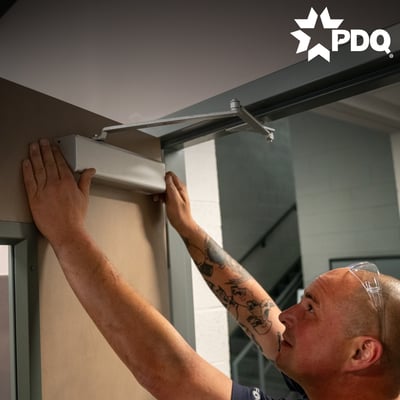
      A maintenance man maintaining a door closer within a commercial building.


      Step 3

      Plan for fire-rated doors and ADA

      Fire-rated doors must self-close and latch every time. A mechanical hold-open arm is fine on a non-rated door, but it cannot be used on a fire door. Stop arms (DS, SCS) limit how far a door swings without holding it open.

      On interior, non-fire-rated doors along an accessible route, ADA limits opening force to 5 pounds, and the door must take at least 5 seconds to close from 90 degrees to 12 degrees from the latch. A closer can only meet both if it is sized and adjusted correctly for that door. See why the 5 lb push standard matters in California.

      Where PDQ Door Closers Fit

      University campus building

      Education

      School entrances see heavy traffic at bell times and a fair amount of abuse. Specify the 7100 or 5100 with an Extra Duty Parallel Arm at main entrances, and the 5300 or 5500 on classroom and corridor doors.

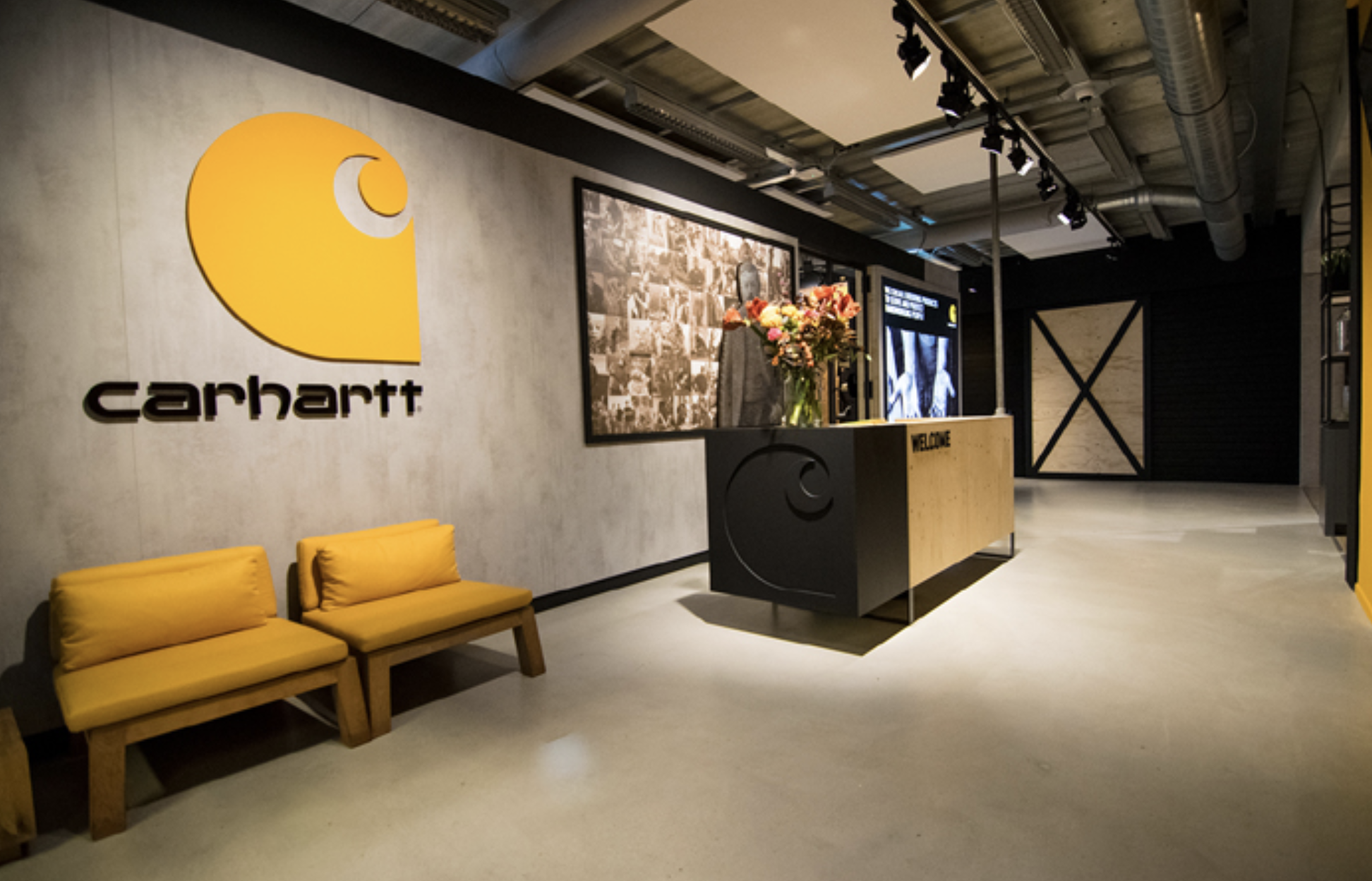
      Carhartt corporate office building

      Commercial Office and Retail

      Use the 5100 on busy storefront and lobby entrances, and the 3100 on private offices, break rooms, and storage. The 5500's full cover suits entrances where the hardware is on display.

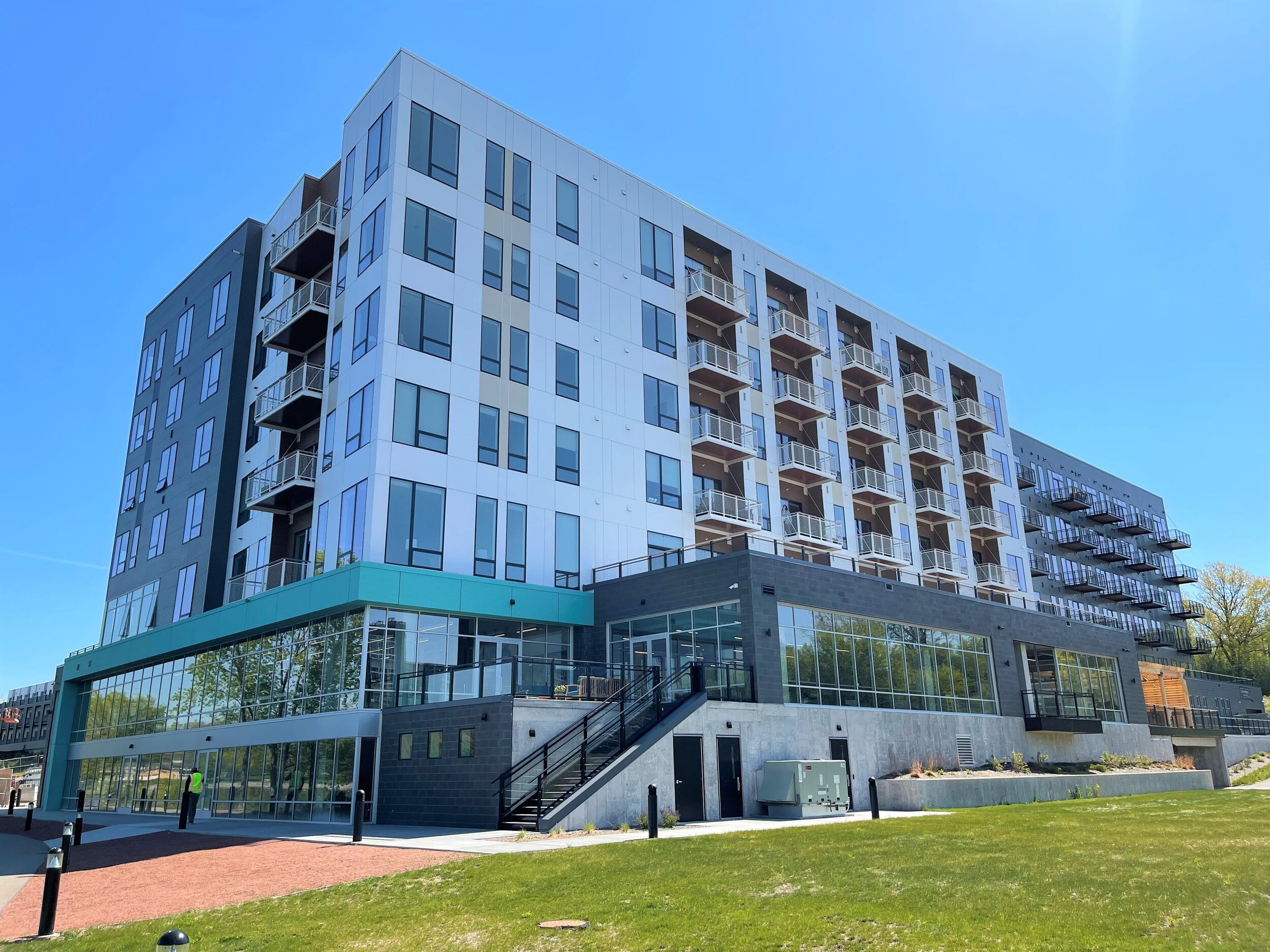
      RiverHeath Willow multifamily apartment building

      Multifamily

      Corridor and stairwell doors in apartment buildings are often fire rated and must close and latch on their own. The 5300 and 5500 are UL listed for 3-hour fire doors and adjust to meet ADA opening force on common-area doors.

      Door Closer FAQs

      What is the difference between a heavy duty and standard duty door closer?

      A heavy duty door closer is built for higher-traffic, higher-abuse openings than a standard duty closer, usually with a stronger body and more arm options. PDQ's 5300 and 5500 are standard duty closers for classrooms, corridors, and typical entrances. The 5100 steps up to heavy duty for busy commercial entrances, and the 7100 adds a cast iron body and forged steel arm for the most demanding doors. All four are ANSI/BHMA Grade 1, so the choice is about traffic and abuse, not certification.

      What is a parallel arm door closer and when do I need one?

      A parallel arm door closer mounts on the push side of the door, with the arm folding parallel to the door when it is closed. It is the usual choice for corridor doors and for exterior doors where the closer should be inside, out of the weather and out of reach. A parallel arm delivers less closing force than a regular arm, so size the closer up if the door is near the top of its range. All five PDQ series include parallel arm mounting.

      Can a door closer hold a door open, including on fire-rated doors?

      On a non-rated door, yes: PDQ offers hold-open arms on all five series. On a fire-rated door, no. A fire door must close and latch on its own, and NFPA 80 only allows it to be held open by a device that releases automatically on a fire alarm or smoke detector signal, never by a mechanical hold-open arm.

      How do I choose the right door closer size?

      Closer sizes run from 1 to 6, and the right one depends on door width, door weight, and whether it is an interior or exterior door. Most 3'0" x 7'0" commercial doors need a size 3 or 4, and parallel arm mounting may call for one size higher. PDQ closers are field adjustable across a range (for example, BF through 6 on the 7100, 5500, and 5300), so one closer covers several door sizes. Check the sizing chart in the installation instructions for your series.

      Are PDQ door closers ADA compliant?

      The 7100, 5500, 5300, and 3100 series comply with ADA and ICC/ANSI A117.1 when sized and adjusted for the door. [VERIFY 5100 with engineering, then either add it to this sentence or leave it out.] Compliance depends on installation: interior doors on an accessible route need an opening force of 5 pounds or less and a closing time of at least 5 seconds from 90 degrees to 12 degrees.

      How do I adjust a door closer?

      Most commercial closers have separate valves for sweep speed (most of the swing), latch speed (the last few degrees), and backcheck, plus delayed action on models that have it. Make small turns, test the door after each one, and confirm it still latches fully, especially on a fire-rated door. Never back a valve all the way out. For model-specific steps, see the installation instructions for your series on the PDQ Downloads page.

      Door Closer Guides

      Contractor reviewing PDQ commercial door closers
      Guide

      Types of Commercial Door Closers: How to Choose the Right One

      ADA compliant commercial door hardware
      Guide

      ADA Compliant Door Hardware: Standards, Requirements, and How to Comply

      Commercial building fire, fire-rated doors
      Guide

      Are Fire-Rated Doors Required for Every Commercial Space?

      Complete the Opening

      A closer is one part of the door. Pair it with PDQ exit devices and hinges for a complete, code-ready opening.

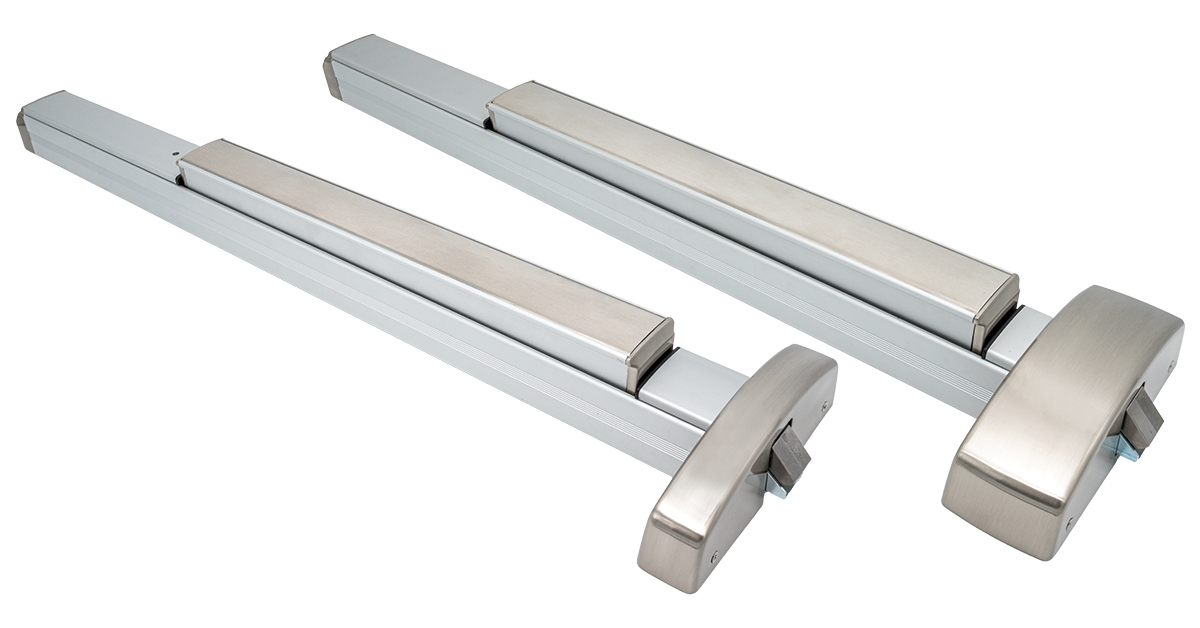
      PDQ 6300R and 6400R rim exit devices

      Exit Devices

      Grade 1 wide stile 6300 and narrow stile 6400 Series exit devices in rim, surface vertical rod, and concealed vertical rod.

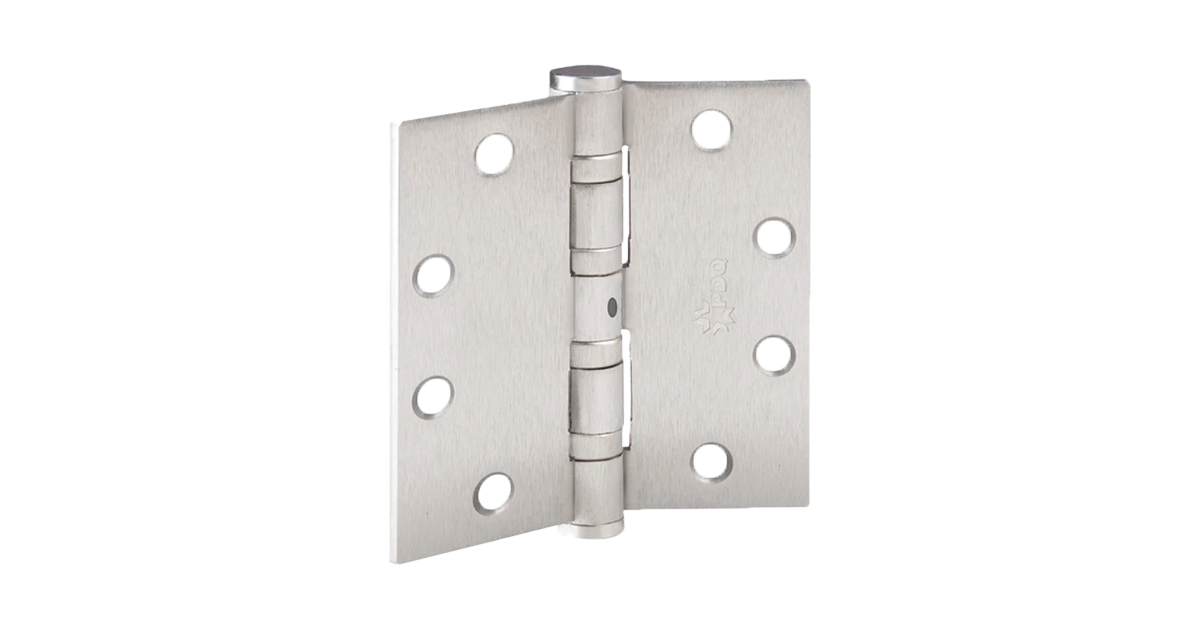
      PDQ 4 ball bearing door hinge

      Door Hinges

      Ball bearing, plain bearing, spring, and electrified hinges for commercial doors.

      Need Help Choosing a Door Closer?

      Tell us about your project and a PDQ rep will help you match closers to your doors, check retrofit fit, and get submittals and pricing.