


Choose Your Key Control
The keyway decides who can copy your keys. Choose it before the levels, because changing keyways later means replacing every cylinder.
| Key control level | PDQ keyways | Who can copy keys | Best for |
|---|---|---|---|
| Open (standard) | Schlage C (default) and other standard keyways | Any locksmith, hardware store or home center | Doors where quick, easy key copies matter more than control |
| Exclusive | PDQ1, PDQ2 | Hard to copy. The key blanks are very hard to find in the marketplace | Cutting down on unauthorized copies without registration paperwork |
| Restricted | TA, PDQ3 | Only PDQ, with a letter of authorization from the owner. Every key is registered and no blanks are sold | Facilities that need to stop copies made at lock shops, hardware stores and home centers |
| High Security Cylinder | PDQ proprietary high security keyway with sidebar. Conventional cylinders plus SFIC and LFIC cores | Only PDQ. Keys ship cut from the factory and no key blanks are sold | Server rooms, records storage, pharmacies and exterior entries that need drill and pick resistance as well as key control |
| Patented (VAULT) | VAULT SFIC keyways | Only PDQ, with a letter of authorization. The design is patent protected through 2044 | Campuses that want top key control and a phased upgrade. VAULT keys also operate many standard SFIC cores (check availability) |
Conventional or Interchangeable Core?
The cylinder format decides how fast you can rekey when a key goes missing.
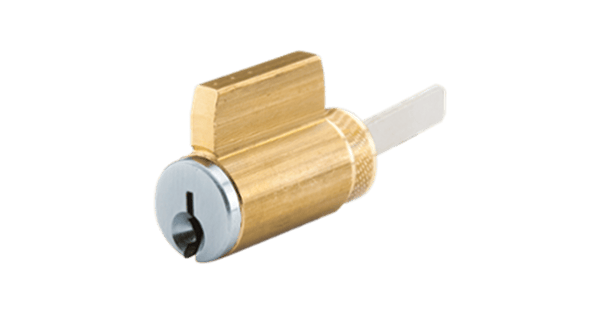
Conventional cylinder
- How it's rekeyed
- A locksmith removes and repins the cylinder. Some breakdown of the lock is needed.
- Works with
- Key-in-lever, mortise and rim cylinders on PDQ hardware. Most come as 6-pin cylinders keyed to 5 pins.
The standard choice when the owner already has a locksmith and rekeying is rare.
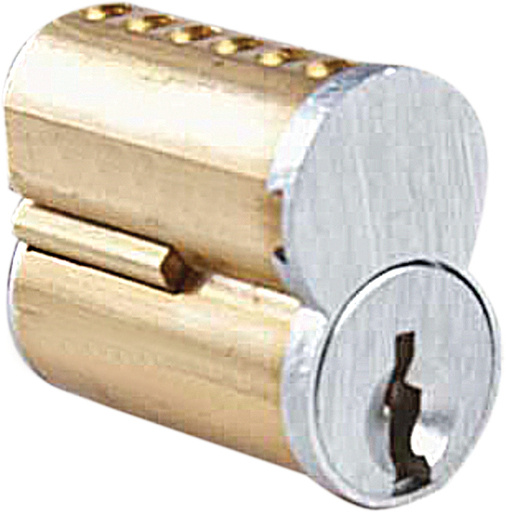
Small format IC (SFIC)
- How it's rekeyed
- Pull the core with a control key and drop in a new one. No tools and no locksmith visit.
- Works with
- Any SFIC housing, including other brands' SFIC hardware, in Best-compatible keyways.
PDQ SFIC cores add a sidebar for extra security. This is the format VAULT uses.
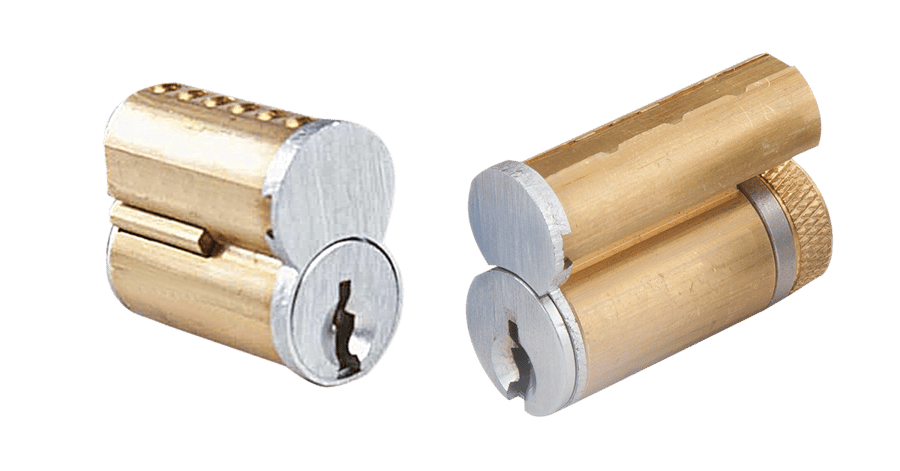
Large format IC (LFIC)
- How it's rekeyed
- Same control-key swap as SFIC.
- Works with
- PDQ LFIC uses the Schlage LFIC format. Large format cores usually only fit one manufacturer's hardware.
Available in high security. LFIC cores can't be ordered zero bitted.
Keying Terms in Plain English
The abbreviations you'll see on hardware schedules, keying forms and quotes.
- Bitting
- The numbers that describe the cuts on a key. Two keys with the same bitting and keyway open the same locks.
- Bitting list
- The record of every key's cuts in a master key system. PDQ releases it to a distributor only with written authorization from the building owner.
- Change key (CK)
- The lowest key in a system. It opens one lock, or a group of locks that are keyed alike.
- Combinate
- To set a lock, cylinder or key to a specific combination.
- Concealed key control (CKC)
- The key symbol is stamped where occupants can't see it, such as the back of the cylinder or the side of a core. More secure than visual key control.
- Construction core
- A temporary core used while a building is under construction, then swapped for the permanent core. PDQ offers returnable and disposable construction cores.
- Construction master key (CMK)
- A temporary key the contractor uses during construction. It stops working for good once a permanent key is used in each lock, with no need to remove the cylinders.
- Control key
- The special key that removes and installs interchangeable cores. Keep very few of these.
- Core
- The removable part of an interchangeable cylinder that holds the plug, pins and springs. It has a figure-eight shape.
- Cross keying
- Setting up one key to open a lock outside its normal group. PDQ recommends avoiding it, because it weakens the system.
- Grand master key (GMK)
- A key that opens all the locks under two or more master key groups, such as a whole building.
- Great grand master key (GGMK)
- The top key in a four-level system. It opens every lock in the system.
- Interchangeable core (IC)
- A cylinder core that can be removed and replaced with a control key, so locks can be rekeyed in seconds without removing the lock.
- Key symbol
- The code stamped on a key or cylinder that shows where it sits in the system. For example, AA1 is change key 1 under master key AA and grand master key A.
- Keyed alike (KA)
- Two or more locks set to open with the same key.
- Keyed different (KD)
- Every lock has its own key. This is how locks ship unless you specify otherwise.
- Keying schedule
- The detailed list of how every cylinder in a project is keyed, plus key quantities, stamping and shipping instructions.
- Keyway
- The shaped opening in a cylinder that only accepts a key blank of the matching profile. The keyway sets how hard keys are to copy.
- Large format interchangeable core (LFIC)
- An interchangeable core with a larger body that usually fits only one manufacturer's hardware. PDQ LFIC uses the Schlage format.
- Letter of authorization
- A letter on the building owner's letterhead that lets a distributor order restricted keys, blanks, cylinders or the bitting list.
- Master key (MK)
- A key that opens a group of change key locks, such as one floor or department.
- Master key system
- Any keying arrangement with two or more levels, so some keys open more locks than others.
- Master pin
- An extra pin inside a cylinder that lets more than one key operate it. More levels mean more master pins.
- Restricted keyway
- A keyway PDQ sells only to authorized users. Keys and cylinders need a letter of authorization.
- Selective master key
- A key for a specific job, such as housekeeping or engineering, that opens a chosen set of locks across the system.
- Sidebar
- A second locking feature inside PDQ cylinders that the key must also line up, for added security.
- Small format interchangeable core (SFIC)
- An interchangeable core with a standard small figure-eight shape that fits any brand's SFIC housing.
- Visual key control (VKC)
- The key symbol is stamped on the face of the cylinder and on the key, so keys and locks are easy to match. Convenient, but less secure.
- Zero bitted
- A cylinder set to the manufacturer's "0" combination, usually so it can be keyed later.
No terms match. Try a shorter word.
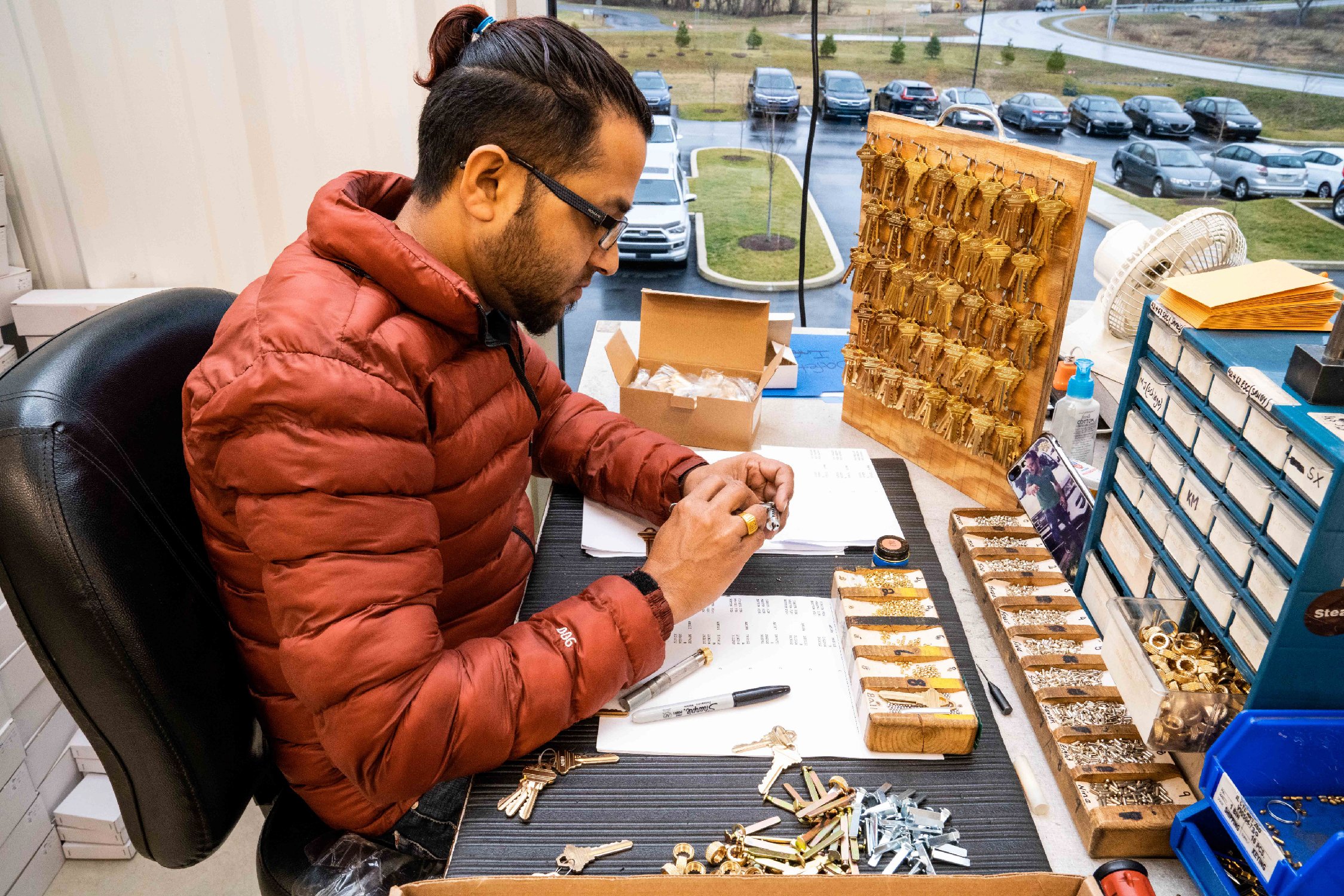
From Floor Plan to Keys in Hand
- List every opening. Start with the exterior doors and work inward. Group openings by building, floor or department.
- Choose key control and a cylinder format. Decide who should be able to copy keys, and whether you want interchangeable cores for fast rekeying.
- Set the number of levels. Use as few as the building needs. PDQ recommends no more than four.
- Decide who carries what. Key to the security plan, not to individual people. Limit top master keys and control keys to a few, and avoid cross keying.
- Fill out PDQ's keying forms and send them to your PDQ rep with the hardware order.