Skip to content
    Talk to an Expert

      Commercial Mortise Locks

      Talk To An Expert

      Grade 1 Mortise Locksets for Commercial Doors

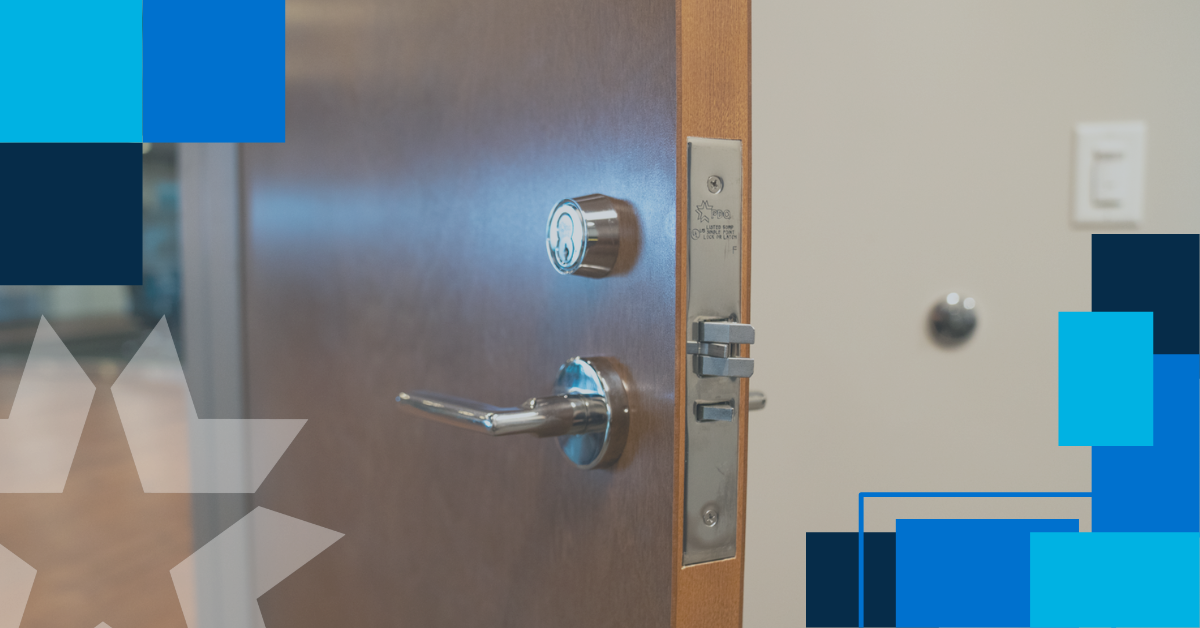
      Mortise locks are commercial locks that fit into a pocket cut in the edge of the door, with the latch, deadbolt and locking parts housed in one steel case. PDQ makes mechanical and electrified mortise locksets on the MR Series chassis, plus the MJ mortise deadbolt. The MR Series is certified ANSI/BHMA A156.13 Grade 1 for operation and security, UL listed for 3-hour fire doors, and backed by a lifetime limited warranty.

      Mortise Locks by Type

      Start with how the door will be locked. A mechanical lock uses keys and levers, and an electrified lock connects to a wired access control system. For battery-powered locks with PIN, card and phone access, see Spirit electronic door locks.

      PDQ MR Series Grade 1 mechanical mortise lock with Philadelphia lever
      Mechanical · Grade 1

      MR Series Mortise Lock

      Our flagship mortise lock, with a 12-gauge cold rolled steel case and a single cam design across all locking functions.

      • Tested to over 14 million cycles, 14x the ANSI/BHMA standard
      • 10 lever styles, F and J trim, 8 finishes; lifetime limited warranty

      Best for: Schools, hospitals and high-traffic interior doors

      PDQ MR199 Grade 1 electrified mortise lock
      Electrified · Grade 1

      MR199 Electrified Mortise Lock

      The MR Series with motor-driven locking and unlocking, for doors on a wired access control system.

      • Field changeable from fail secure to fail safe; 12 to 24 VAC or VDC input
      • Optional request to exit (REX) and latch bolt monitor (LBM)

      Best for: Access-controlled offices, labs and secure suites

      PDQ MJ Series mortise deadbolt with thumbturn
      Mortise Deadbolt

      MJ Mortise Deadbolt

      A mortise deadbolt with no latch or lever, for doors that need a separate deadlock.

      • UL listed for 3-hour fire doors; optional vacant/occupied indicator
      • Conventional or interchangeable cores; 10-year limited warranty
      • See all commercial deadbolts

      Best for: Doors that need a deadbolt only

      Compare PDQ Mortise Locks

      Model TypeGradeTrim OptionsFail Safe / Fail SecureFinishesWarranty
      MR Series MechanicalANSI/BHMA Grade 1 (operational and security)F sectional or escutcheon (forged brass, round or square rose); J sectional, J escutcheon and J Wide escutcheon (stainless steel); 10 lever stylesNot applicable (mechanical)605, 606, 612, 613E, 622, 626 (F trim only), 629, 630Lifetime limited
      MR199 ElectrifiedGrade 1Same F, J and J Wide trim as the MR SeriesField changeable; ships fail secure605, 606, 612, 613E, 622, 626, 629, 6302 years
      MJ Series Mortise deadbolt[VERIFY: grade]Cylinder and thumbturn only, no leverNot applicable605, 606, 612, 613E, 622, 629, 63010 years limited

      All three models are UL 10C listed for 3-hour fire doors. The MR Series and MR199 are listed for single doors up to 4'0" x 8'0" and active leaves in pairs up to 96" x 96". The MR Series fits 1-3/4" doors with a 2-3/4" backset, with 2" to 3" doors by special order, and is approved for the Florida High Velocity Hurricane Zone. The MR Series and MR199 are assembled in the USA.

      Key: F trim = forged brass, 626 finish only · J trim = stainless steel · REX = request to exit switch · LBM = latch bolt monitor · Antimicrobial coating available on 626 and 630.

      Ready to spec or order?Find A Sales Rep

      Need Certification Details?

      See every UL, ANSI/BHMA, and ADA listing for PDQ mortise locks and the rest of our hardware in one filterable matrix.

      PDQ MR Series Grade 1 mortise lock

      How to Choose a Mortise Lock

      PDQ MR Series mortise lock with Philadelphia lever and escutcheon trim

      Step 1

      Pick the function and the trim

      Decide who needs to get in, who needs to get out, and whether the door should ever stay unlocked. A classroom needs a lock the teacher sets from the hall, a storeroom should lock every time it closes, and a restroom needs a privacy turn. Use the functions table to match the opening, and check that the inside lever always lets people out where code requires it.

      Then choose the trim. Sectional trim mounts the lever on a round or square rose, with the cylinder set separately, for a cleaner look in offices and finished spaces. Escutcheon trim puts the lever and cylinder on one long plate, which covers more of the door face and suits retrofits and high-abuse doors. The MR Series offers both, plus a J Wide escutcheon that meets UFGS 08 71 00.

      Line 7


      Step 2

      Confirm the door prep, backset and keying

      A mortise lock needs a pocket cut into the door edge, and most commercial doors arrive already prepped to the hardware schedule. The MR Series uses a 2-3/4" backset on 1-3/4" doors, with 2" to 3" doors by special order. Case size and latch and deadbolt centerlines vary by brand, so check the prep against the MR Series templates before you order.

      Plan keying at the same time. The MR Series takes 6 or 7-pin mortise cylinders, standard high security cylinders, or interchangeable cores compatible with Best, Falcon, Arrow and Schlage large format. Schlage C compatible keyways are standard, and locks can be keyed into an existing master key system. See keys and cores for options.

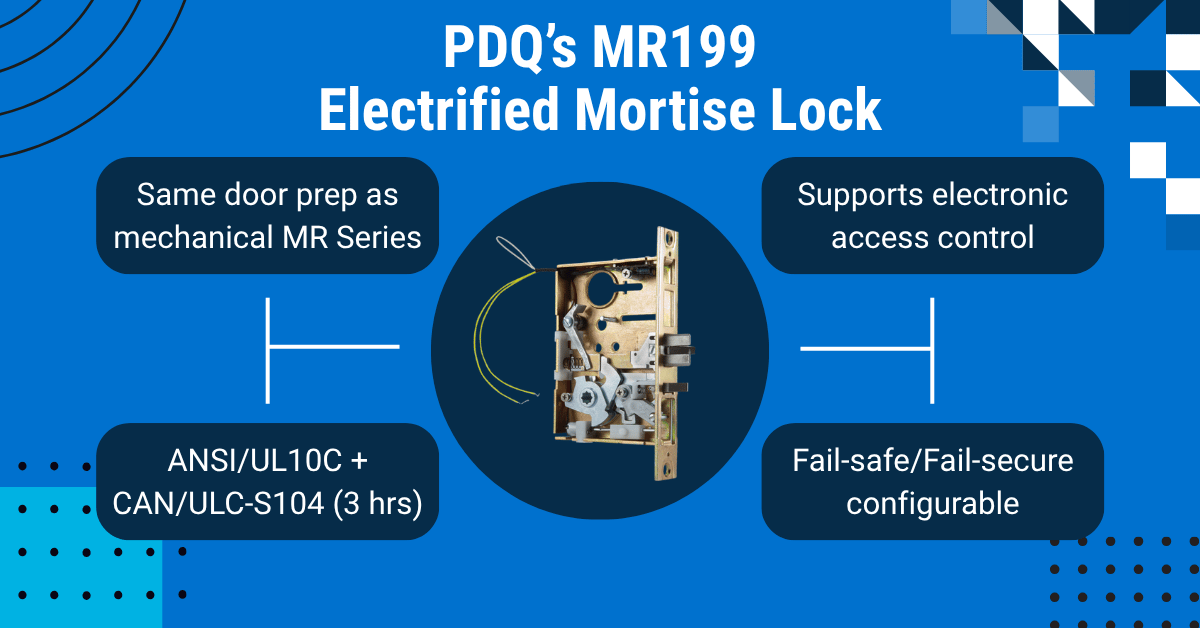
      PDQ MR199 electrified mortise lock uses the same door prep as the mechanical MR Series and supports access control

      Step 3

      Choose mechanical or electrified

      Use the MR Series where keys and levers are enough. Use the MR199 electrified mortise lock where the door is wired to an access control panel and you need fail safe or fail secure control. The MR199 uses the same door prep as the MR Series. For PIN, card and phone access with no wiring, see Spirit electronic door locks.

      Choose a mortise lock over a cylindrical lock for high-traffic doors, doors that need a latch and deadbolt in one case, and functions a cylindrical lock can't offer. Choose a cylindrical lock where budget and fast installation matter more, or where the doors are already bored for one.

      Where PDQ Mortise Locks Fit

      Aerial view of North Georgia Medical Plaza, a two-story stone and brick medical office building with a covered entrance canopy, large windows, and a landscaped parking lot surrounded by trees.

      Healthcare

      Hospital doors see constant traffic and frequent cleaning. The MR Series comes in 626 and 630 with an optional antimicrobial coating on high-touch levers, and privacy functions with a vacant/occupied indicator help on patient restrooms. Use the MR199 on doors tied to access control.

      University campus building

      Higher Education

      Campus doors take heavy use and need tight key control. Use the MR148 classroom function on teaching spaces and the MR136 dormitory/exit function on residence hall rooms. MR locks key into existing master key systems, and the MR199 adds card access where the campus is wired.

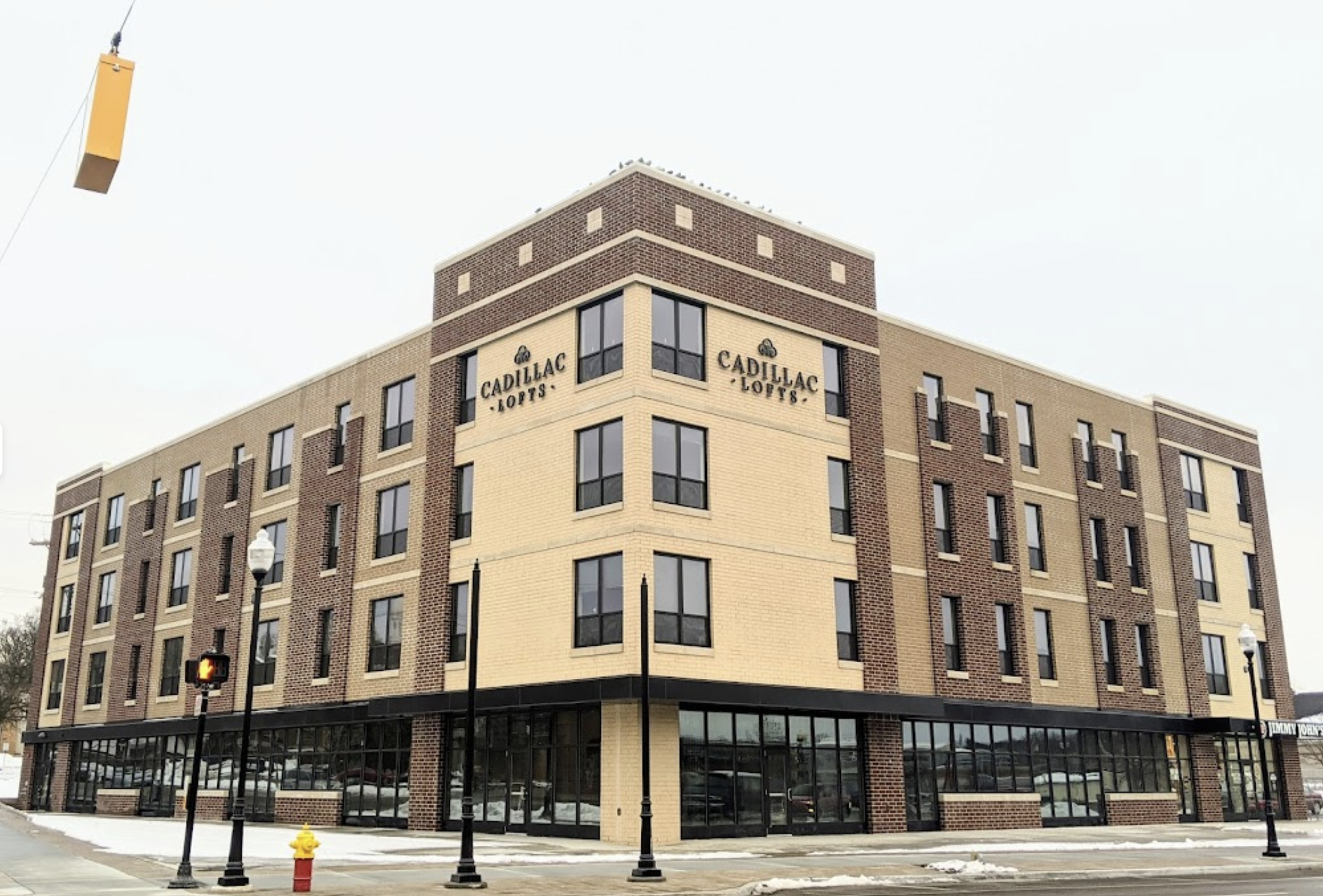
      Street-level photo of Cadillac Lofts, a four-story mixed-use brick building on a corner, with tan and brown brick facade, large ground-floor storefront windows including a Jimmy John's, streetlights, and a fire hydrant in the foreground on a snowy day.

      Multifamily

      Unit entry doors open and close all day and need locks managers can key and control as one system. Use the MR162 apartment/corridor or MR186 apartment function on unit doors, and key them into one master key system. For keyless unit doors, see Spirit electronic door locks.

      Mortise Lock FAQs

      What is a mortise lock?

      A mortise lock is a lock that fits into a deep pocket, called a mortise, cut into the edge of the door. The latch, deadbolt and locking parts sit inside one steel case, and the levers and cylinder mount through the door into that case. Mortise locks are the heavy-duty standard for commercial doors, and the PDQ MR Series is certified ANSI/BHMA A156.13 Grade 1 for both operation and security.

      What is the difference between a mortise lock and a cylindrical lock?

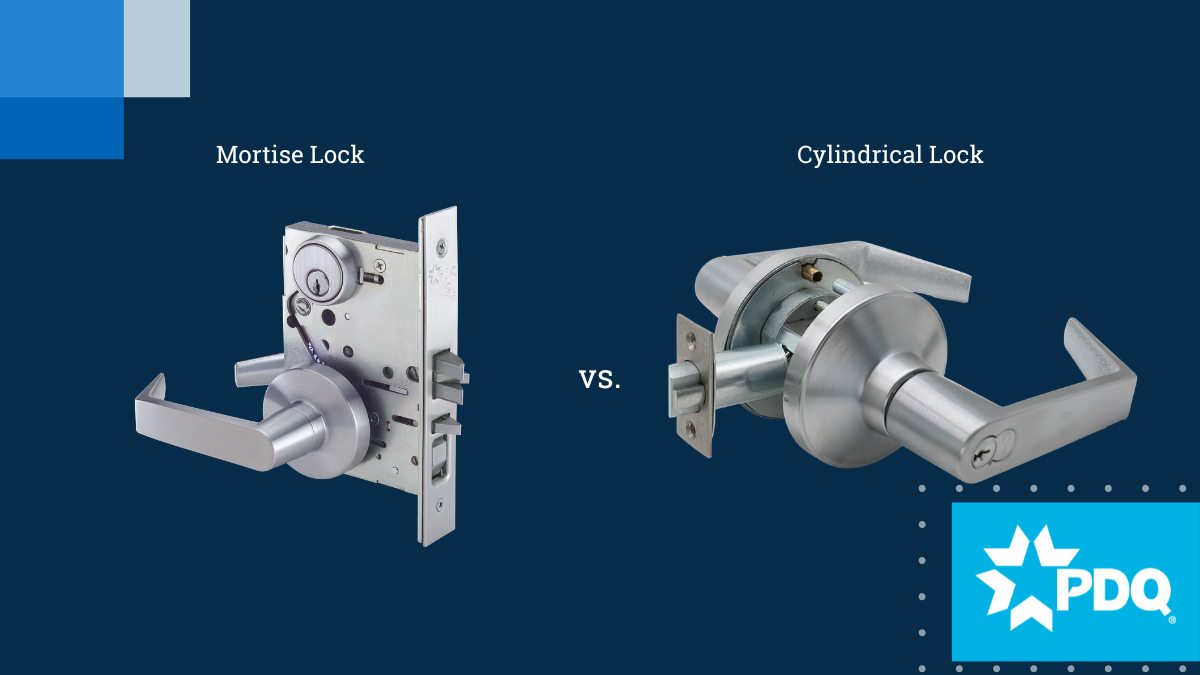
      A mortise lock sits in a pocket cut into the door edge, while a cylindrical lock installs through two bored holes. Mortise locks offer more functions, including ones that combine a latch and deadbolt in one case, and they hold up well on high-traffic doors. Cylindrical locks cost less to buy and install and are easier to swap on a retrofit. Our guide Mortise Lock vs. Cylindrical Lock: Which Do You Need? compares them in detail.

      Are all mortise locks the same size?

      No. Case size, faceplate size and latch and deadbolt centerlines vary by manufacturer, so one brand's lock may not drop into another brand's door prep. The standard commercial backset is 2-3/4", and the PDQ MR Series uses that backset on 1-3/4" doors. Always check the lock template against the door prep and strike before you order.

      How do I identify a mortise lock?

      Look at the door edge and the trim. A mortise lock has a tall rectangular faceplate on the edge of the door, and its key cylinder sits separately above or below the lever instead of inside it. Our guide How to Identify a Commercial Mortise Lock walks through the faceplate, trim and cylinder step by step.

      Can a mortise lock be electrified?

      Yes. The PDQ MR199 adds motor-driven locking and unlocking to the MR Series, runs on 12 to 24 VAC or VDC, and is field changeable between fail secure and fail safe. For doors with no wiring, PDQ Spirit electronic door locks include a battery-powered mortise model.

      Can I replace a mortise lock with a cylindrical lock?

      Not as a simple swap. A mortise lock needs a pocket in the door edge and a cylindrical lock needs bored holes, so converting usually means filling the pocket, new door prep or a new door. Filling the pocket adds cost and may not be structurally sound, so most facilities replace a mortise lock with another mortise lock.

      Mortise Lock Guides

      Mortise lock and cylindrical lock compared side by side
      Guide

      Mortise Lock vs. Cylindrical Lock: Which Do You Need?

      Commercial mortise lock installed in a wood door with the lock case exposed on the door edge
      Guide

      How to Install and Troubleshoot a Commercial Mortise Lock

      Spec Is Right guide cover for the PDQ MR Series mortise lock
      Guide

      Spec Is Right: How to Specify PDQ's MR Series Mortise Lock

      Complete the Opening

      A mortise lock is one part of the door. Pair it with PDQ closers and electronic locks for a complete opening.

      PDQ 7100 Series Grade 1 door closer

      Door Closers

      Grade 1 closers from light to extra heavy duty, UL listed for 3-hour fire doors.

      PDQ Spirit wireless electronic keypad trim

      Electronic Door Locks

      Battery-powered Spirit locks for mortise, cylindrical and exit device openings, with no wiring.

      Need Help Choosing a Mortise Lock?

      Tell us about your openings and a PDQ rep will help you match functions and trim to your doors, check door prep and fire ratings, and get submittals and pricing.