

January 1, 2026
Did you know panic bars are required by code in most commercial buildings? They are vital for safety during emergencies. When people need to exit fast, panic bars make it possible without delay.
Choosing the wrong grade can lead to failures, costly repairs, and even safety risks. That’s why understanding panic bar grades matters.
So, what’s the difference between Grade 1 and Grade 2 panic bars?
This guide will explain the grades, why they matter. By the end, you’ll know which panic bar works best for your building.
What is a Panic Bar and Why Does It Matter?
What is a Panic Bar?
A panic bar, also called a crash bar or exit device, allows quick egress from a building or room in the event of an emergency. The use of a horizontal push bar allows for faster actuation of the latch bolt than turning a lever on lockset. The push bar increases the speed and ease of egress.
While all exit devices are panic devices, not all panic devices are exit devices. The difference is fire rating. Panic devices are not fire-rated, but they are UL certified for panic use. They can be installed on doors in the path of emergency egress where fast exit is critical, but fire resistance is not required. Exit devices are fire-rated for doors that must be certified for panic egress as well as resist fire. Just because a door is in an egress path, does not automatically mean it requires a fire label.
Panic devices still meet strict UL standards. They must operate under set force limits after thousands of cycles, even with a 50-pound preload on the door. These tests ensure reliability during emergencies.
Where Are Panic Bars Used?
You’ll find panic bars in schools, hospitals, offices, and retail stores. They are also common in stadiums and theaters where large crowds gather.
Imagine a packed stadium during an emergency. People need to exit quickly without confusion. Panic bars make that possible by allowing doors to open with one simple push.
Understanding Hardware Grades
What Do Grades Mean?
Panic bars are rated by ANSI/BHMA standards. These grades show how strong and durable the hardware is. The two most common grades for commercial doors are Grade 1 and Grade 2.
What Do Grades Measure?
Grades measure three things: durability, strength, and security. Durability is tested by cycle counts, which show how many times the device can operate without failure. Strength measures how well the device resists force. Security checks how well it prevents tampering.
Why Grade 1 Matters Most
Grade 1 is the highest standard for commercial hardware. It is tested for heavy use and harsh conditions. These devices last longer and meet strict safety codes. PDQ’s 6300 and 6400 series are both Grade 1, so they meet the toughest standards for performance and reliability.
Grade 1 Panic Bars – The Gold Standard
What Makes Grade 1 the Best?
Grade 1 panic bars are built for strength and endurance. They are tested for over 500,000 cycles. This means they can handle years of heavy use without failing. They also resist force and tampering, which adds security.
Where Should You Use Grade 1?
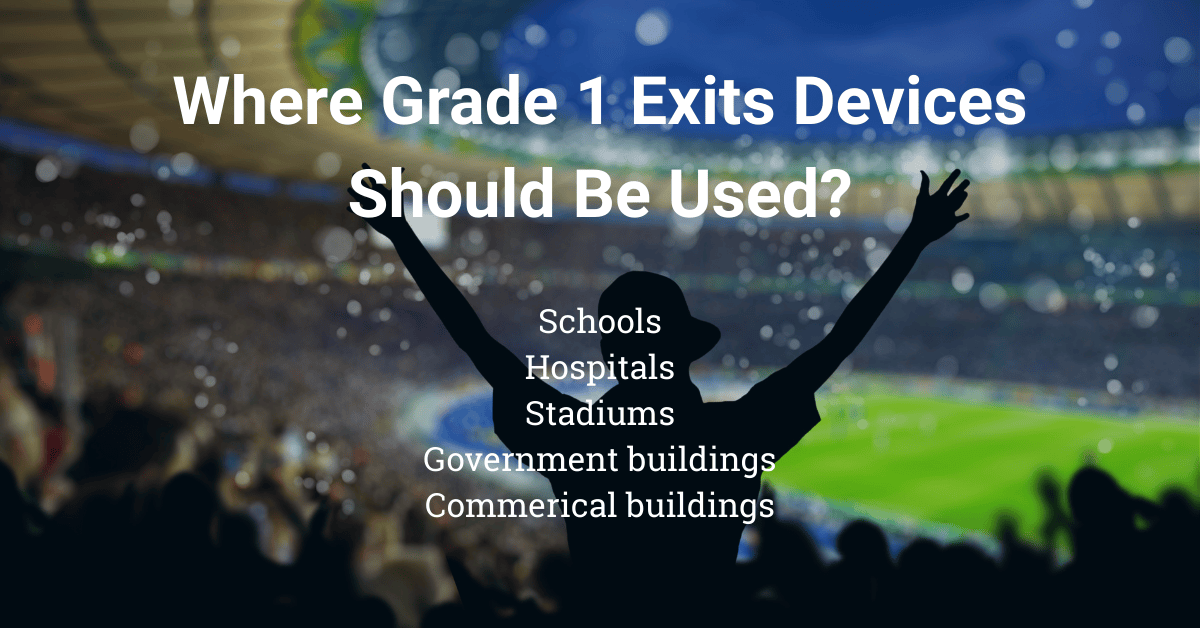
Grade 1 devices are ideal for high-traffic areas. Schools, hospitals, stadiums, and government buildings all need this level of durability. These places see hundreds or thousands of people every day. A weaker device would wear out fast and risk safety.
Benefits of Grade 1
Grade 1 panic bars offer long life and reliable performance. They meet strict building and life safety codes. Choosing Grade 1 means fewer repairs and better protection during emergencies. For any building with heavy traffic, Grade 1 is the smart choice.
PDQ 6300 & 6400 Series – Grade 1 Solutions for Every Door
PDQ’s Grade 1 Options
PDQ offers two Grade 1 exit device series: the 6300 and 6400. Both meet ANSI/BHMA A156.3 standards for strength and safety. They are built for high-traffic spaces like hospitals, schools, and government buildings. These devices deliver long-lasting performance where reliability matters most.
Configurations Available
Both series come in multiple configurations. You can choose rim, surface vertical rod, or concealed vertical rod models. This flexibility makes them suitable for different door setups and security needs.
The Key Difference
The only difference between the 6300 and 6400 is door stile width. The 6300 fits standard stile doors. The 6400 fits narrow stile doors often found on glass or aluminum frames. Both offer the same durability, security, and Grade 1 performance. You simply pick the model that matches your door design.
Grade 2 Panic Bars – When Are They Enough?
What is Grade 2?
Grade 2 panic bars are built for moderate traffic. They are tested for over 250,000 cycles. This makes them suitable for areas that see less daily use compared to schools or hospitals.
Best Applications
Grade 2 devices work well in small offices, retail stores, and light commercial spaces. These locations have fewer people passing through each day. A Grade 2 device can handle the load without wearing out too quickly.
Why PDQ Focuses on Grade 1
PDQ designs for maximum safety and durability. High-traffic spaces need hardware that lasts and meets strict codes. That’s why PDQ offers Grade 1 devices like the 6300 and 6400 series. They provide the strength and reliability needed for demanding environments.
How to Choose the Right Panic Bar
Traffic Volume Matters
Start by looking at how many people use the door each day. High-traffic areas need Grade 1 hardware. PDQ 6300 or 6400 are perfect for these spaces. They handle constant use without wearing out.
Door Design Considerations
Check your door style before choosing a device. Standard stile doors work with the PDQ 6300 series. Narrow stile doors, often on glass or aluminum frames, need the PDQ 6400 series. Both offer the same Grade 1 strength and reliability.
Budget vs. Durability
Grade 1 panic bars cost more upfront. But they save money over time because they last longer and need fewer repairs. Grade 2 may seem cheaper, but it wears out faster in busy areas.
If you’re unsure, talk to a PDQ expert. They can help you meet safety codes and choose the right device for your building.
Choose the Right Panic Bar for Safety
Grade 1 and Grade 2 panic bars serve different needs. Grade 1 is built for heavy traffic and strict safety codes. Grade 2 works for light commercial spaces with fewer people.
PDQ offers two Grade 1 exit device options: the 6300 for standard stile doors and the 6400 for narrow stile doors. Both deliver the same strength, durability, and compliance.
Need help choosing the right exit device? Contact PDQ for expert guidance and top-quality hardware.
